
12 hr
Baños & Devil's Cauldron Waterfall Full-Day Tour from Quito
Journey from Quito to Baños to swing over volcanic valleys and witness the mighty Devil's Cauldron waterfall.
Reserve
Hand-picked by our editors — only the best 5 experiences from 120 reviewed.
Verified partners for every tour, free cancellation where available, and instant confirmation on every booking.
12 hr
Journey from Quito to Baños to swing over volcanic valleys and witness the mighty Devil's Cauldron waterfall.
Reserve
14 hr
Discover Ecuador's adventure capital with cable car rides, epic swings, and stunning volcanic vistas.
Reserve
11 hr
Journey from Quito to Baños to see the dramatic Devil's Cauldron waterfall and ride the iconic swing over the canyon.
ReservePrices from verified partners. Availability updates in real time at checkout. Free cancellation policies apply where shown.
The landmarks, rooms, and views travelers on this tour remember — all visible on a single visit.
The primary waterfall cascades into a powerful vortex with intense natural energy. It is the center of the quito to banos day tour experience.
A high-wire bridge offering direct views of the falls from a distance. It serves as a prime spot for photos on your quito to banos day tour.
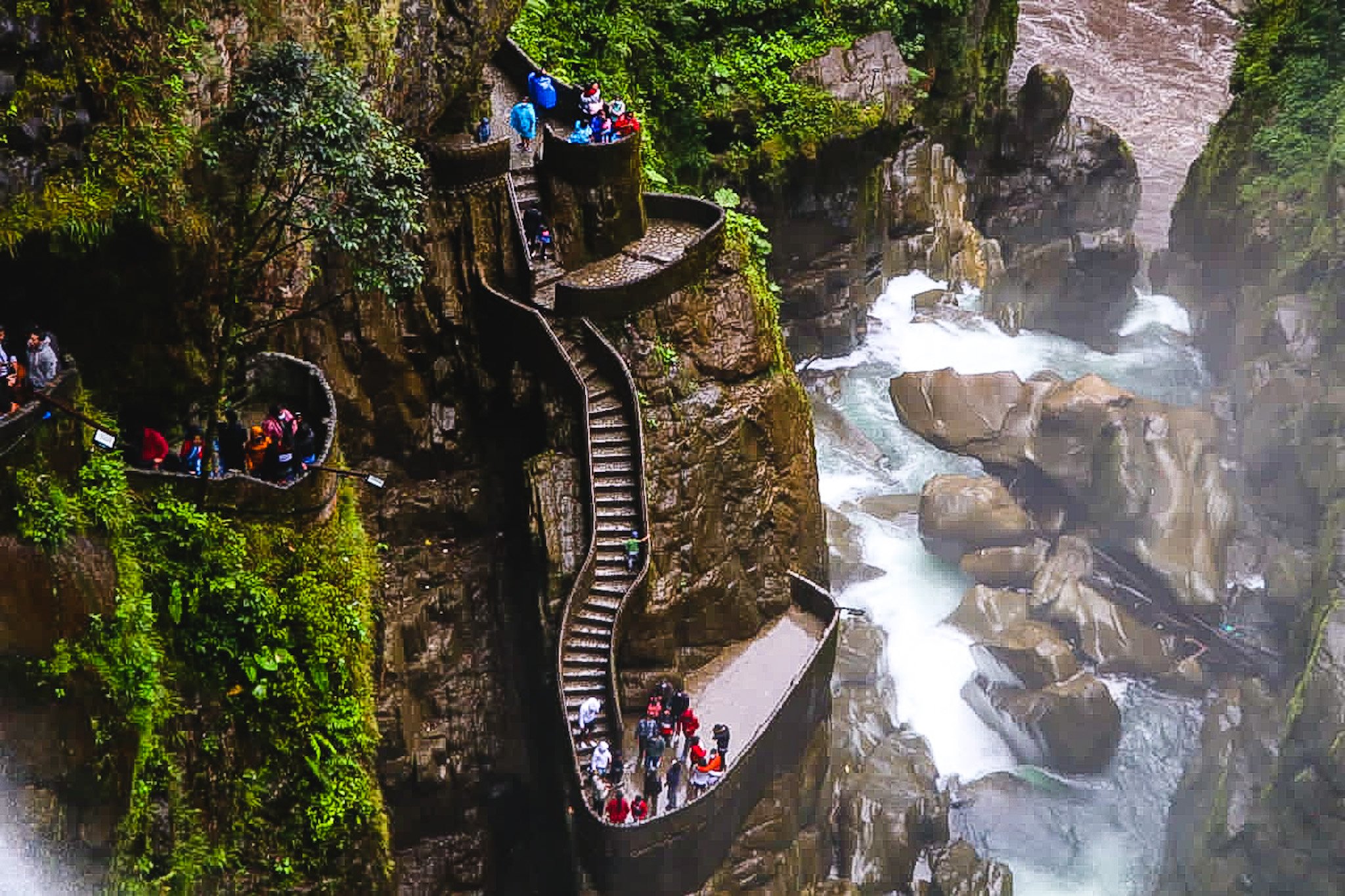
These carved steps lead visitors into the heart of the mist. Use caution as they are the primary access point for the quito to banos day tour.
Strategically placed areas allow you to feel the spray of the water safely. These platforms are essential stops during your quito to banos day tour.
A low-ceilinged path that brings visitors directly behind the waterfall curtain. This experience defines the intensity of the quito to banos day tour.
Guided tours offer seamless logistics for those prioritizing ease, while independent public bus travel empowers travelers seeking total autonomy over their schedule. Choosing the right quito to banos day tour provides structured exploration, whereas public transit facilitates a self-paced journey through the Andean highlands.
| Feature | Top pick Guided Tour | Public Bus |
|---|---|---|
Flexibility |
Fixed schedule | High autonomy |
Planning Effort |
Minimal | Extensive |
Cost Efficiency |
Higher upfront cost | Budget-friendly |
Pace of Visit |
Structured and efficient | Self-directed |
Safety |
Professional transit oversight | Requires vigilance |
Access to Remote Waterfalls |
Direct shuttle transport | Requires local taxis |
| See tickets → |
Verdict: Opt for these quito to banos day tour tours if you prefer convenience, or utilize independent transit if your quito to banos day tour tickets allow for flexible, longer-term exploration of the Tungurahua province.
Choose your ticket, select your date, and reserve in under two minutes. Secure checkout handled by our verified partner.
Instant confirmation by email, with a mobile voucher you can save offline. No printing, no queuing at a collection desk.
Arrive at the entrance, show your voucher on your phone, and walk in. Most tickets include priority or skip-the-line access.
Practical details for your visit straight from our verified partners — hours, access, rules, and how to get there.
Mariscal Sucre area
Common pickup for organized transport
Follow the Pan-American Highway South to Baños
Bus from Quitumbe terminal to Baños
Wear slip-resistant footwear suitable for wet, steep stone stairs. Bring a waterproof jacket as the mist from Pailón del Diablo creates a constant spray.
Keep belongings minimal. Secure valuables in a waterproof bag during your quito to banos day tour.
Photography is permitted. Use waterproof casing for equipment to protect against the heavy waterfall mist encountered on this quito to banos day tour.
The paths are steep, narrow, and slippery, making this route challenging for those with mobility issues. The quito to banos day tour requires navigating several uneven flights of stairs.
Mobile signal is limited in the gorge. Download offline maps before departing for your quito to banos day tour.
The trail is physically demanding and may be unsuitable for very young children or strollers. Parents should supervise minors closely at all times on the slippery rock bridges of the quito to banos day tour.
Small kiosks are available near the entrance. Eat before your descent as food is not permitted on the waterfall trail.
Animals are not permitted on the trails for safety reasons. Do not leave pets unattended in vehicles during your quito to banos day tour.
Ensure your quito to banos day tour guide provides enough time for the full descent. The humidity in the gorge remains high year-round.
Best time to go, insider tips, nearby landmarks, and the cancellation fine print — flip through to skim what matters to you.
How crowds, weather, and events shift across the year.
Clearer skies allow for better views of the valley. July and August are peak months for dry weather travel.
Moderate crowds provide more space on the narrow staircases. Temperatures remain mild in the Tungurahua region.
Occasional rainfall keeps the vegetation lush and the waterfall flow at peak levels. Book your quito to banos day tour in advance.
Quieter period ideal for those seeking solitude. Enjoy faster access to the viewing platforms.
Small details that turn a good visit into a great one.
Arrive between 08:00–10:00 to avoid large groups from the quito to banos day tour buses. Early entry ensures better photo opportunities.
Wear high-quality rain gear for the quito to banos day tour. The mist can soak clothing within minutes.
Use shoes with aggressive tread for the stone stairs of the quito to banos day tour. The rocks become slick near the basin.
Keep small denominations for the 5 USD entrance fee and local snacks. Card systems are unreliable in the gorge.
The climb back up is steep and humid. Pace your ascent during the return leg of the quito to banos day tour.
Non-bookable sights within a short walk — free to visit, easy to pair.
A massive waterfall visible from a cable car station nearby.
A historic hydroelectric site featuring large concrete structures.
Natural volcanic hot springs located in the town center.
Area offering ziplining and canopy walks near the river gorge.
Flexible, no hidden fees.
Cancellations made within 24 hours of the tour start time are non-refundable. All bookings include the 5 USD entrance fee per adult.
Hand-picked options within walking distance — pick a district for vibe, or a specific hotel for convenience.
Clifftop lodge with thermal pool access.
Classic lodging near the town park.
Affordable stay for backpackers in town center.
The geographic transition between the high Andes and the upper Amazon basin creates a distinct ecological corridor along the Pastaza River. A standard Quito to Banos Day Tour traces this topographical descent, moving from the glacial shadow of Cotopaxi down toward the dense cloud forests of the Tungurahua province. Baños de Agua Santa sits at 1,820 meters above sea level, functioning as a thermal resort town built atop geothermally active ground. Historically, indigenous populations and later Spanish colonists recognized the mineral-rich springs bubbling from the base of the active volcano. Today, the settlement anchors the regional economy around outdoor recreation, drawing visitors who navigate the winding cliffside roads known collectively as the Route of the Waterfalls. Procuring Quito to Banos Day Tour tickets allows travelers to traverse this treacherous yet heavily engineered route without navigating the steep, fog-bound switchbacks independently. The defining feature of this valley is the dramatic hydrological drop-off located at Río Verde, Tungurahua, Ecuador. Here, the Pastaza River forces its volume through a narrow basalt chute, creating the Pailón del Diablo, or Devil's Cauldron. A complex network of suspension bridges and hand-carved stone staircases clings to the vertical rock face, providing access to viewing platforms situated just meters from the falling water. The primary staircase, known as the Grieta al Cielo, was carved directly into the bedrock by local builders over several decades, allowing visitors to climb behind the cascade. A modest 5 USD entrance fee per adult funds the ongoing maintenance of these cliffside pathways, which require constant reinforcement against the perpetual moisture and kinetic vibration generated by the 80-meter waterfall. The surrounding flora shifts rapidly from high-altitude scrub to broadleaf tropical foliage, heavily draped in epiphytes and bromeliads that thrive in the continuous mist. Completing a full-day excursion requires careful navigation of the Andean highway system, often incorporating stops at secondary cascades like Manto de la Novia or Agoyán. The infrastructure supporting a Quito to Banos Day Tour has evolved from precarious dirt tracks into a paved, albeit winding, arterial road that supports regular transit. While independent travel is possible, joining an organized Quito to Banos Day Tour tour provides specialized transport vehicles equipped for the sharp gradients and sudden weather shifts characteristic of the region. The juxtaposition of dormant glacial peaks in the morning and humid jungle ravines by the afternoon demonstrates the extreme altitudinal compression of the Ecuadorian landscape. The engineering required to maintain access to the Devil's Cauldron highlights the ongoing negotiation between human infrastructure and volatile geographic forces.
"The engineering required to maintain access to the Devil's Cauldron highlights the ongoing negotiation between human infrastructure and volatile geographic forces."
A step-by-step walkthrough of the visit — what you'll see, how long each stage takes, and the details that matter.
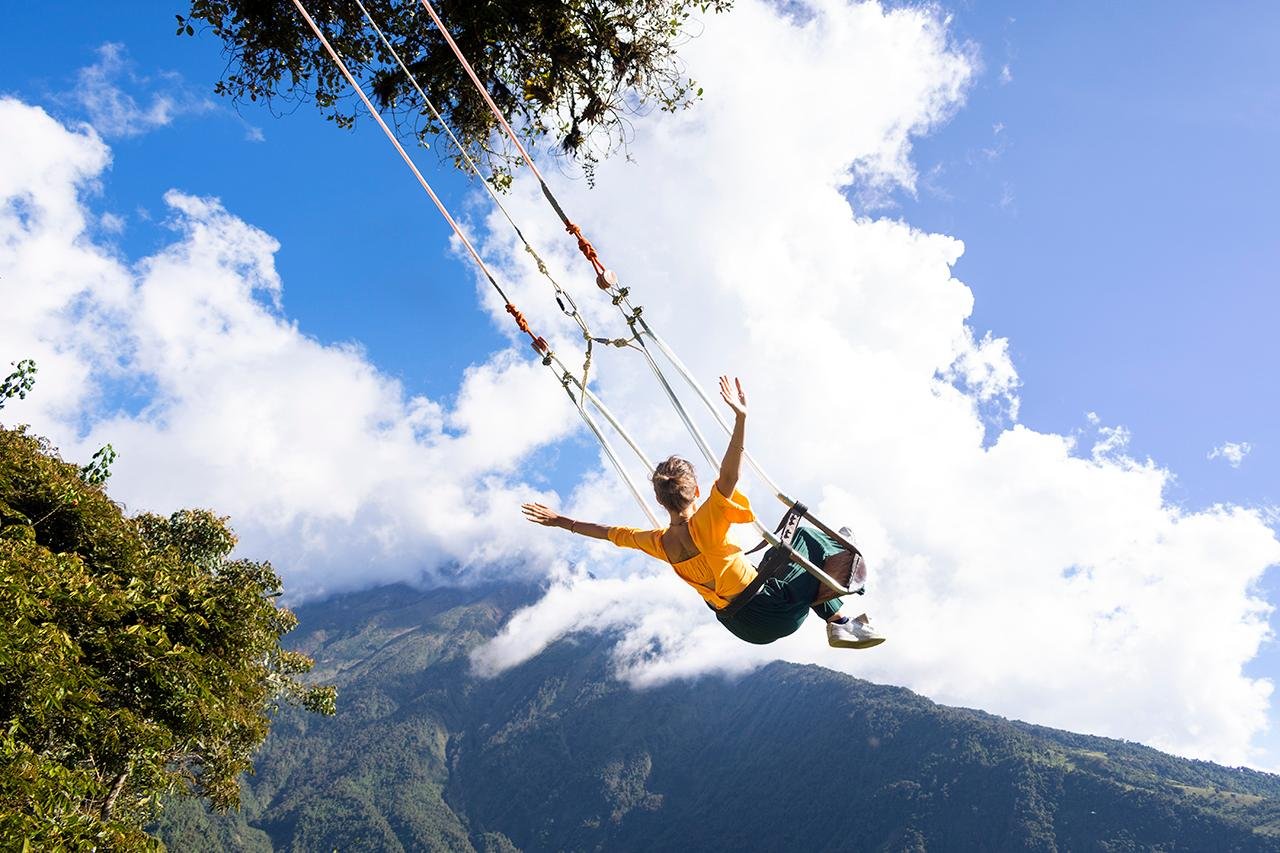
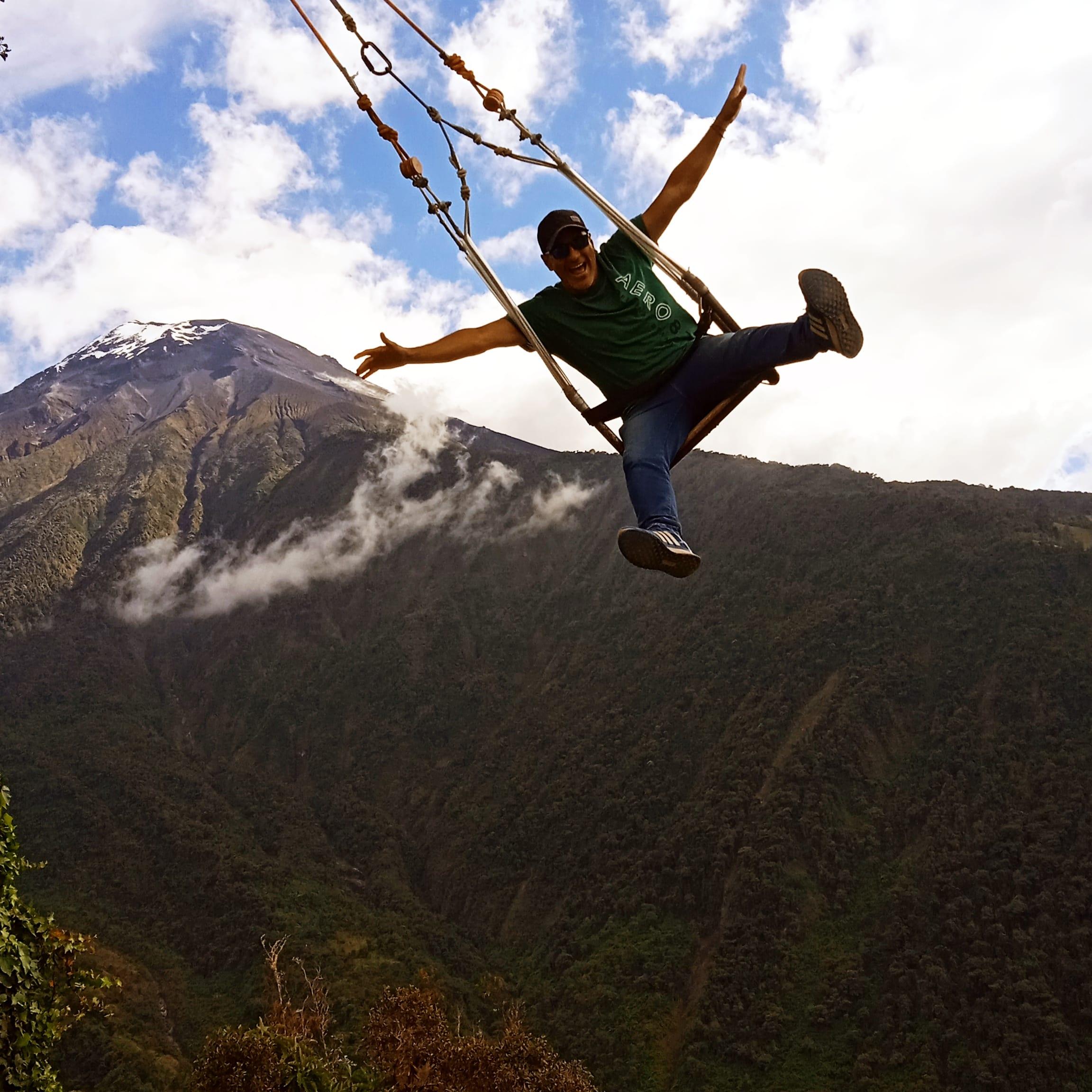
You depart the capital as dawn illuminates the surrounding peaks, traveling south along the Pan-American Highway. The landscape transitions rapidly from urban grids to agricultural plots lining the Avenue of the Volcanoes. Arriving in the Tungurahua region, the vehicle descends into the Pastaza gorge. Many Quito to Banos Day Tour tours schedule a stop at the Casa del Árbol, where you strap into a wooden swing suspended over a steep drop. The momentum carries you out over the valley floor, with the clouded summit of the adjacent volcano dominating the horizon. Continuing along the Route of the Waterfalls, you reach the trailhead for Pailón del Diablo. The gates operate from 08:00–22:00 every day, but arriving during the 08:00–10:00 window helps avoid the peak crowds that arrive later in the day. You descend a steep, damp pathway cut through dense vegetation. The ambient sound builds into a physical roar as you approach the gorge. At the base, you cross a steel suspension bridge swaying slightly above the rapids. Water droplets coat every surface. You grip the cold iron handrails and squeeze through the narrow stone tunnel known as the Grieta al Cielo. Emerging onto the main viewing platform, the river detonates into the rocky basin just meters away, generating a continuous downdraft of cold mist. After climbing back to the upper access point, you rejoin your group for the winding ascent back to the central highlands, leaving the heavy humidity of the Amazon basin behind.
Pailón del Diablo is open from 08:00–22:00 daily.
The entrance fee is 5 USD per adult and is typically managed by the site. Confirm if your quito to banos day tour includes this cost in your booking.
Arriving between 08:00–10:00 is ideal to avoid the busiest hours of the day.
Yes, but the steep terrain of the quito to banos day tour requires high levels of caution for children.
The path involves steep stairs and is not wheelchair accessible. Prepare for a strenuous hike on your quito to banos day tour.
Yes, but protect your camera with a waterproof housing due to the heavy mist. It is a highlight of any quito to banos day tour.
Secure storage is limited, so travel light on your quito to banos day tour.
Food is not permitted on the trail. Plan your meals before starting the quito to banos day tour.
The site is located in Río Verde, a short drive from the main town.