
English| EUR
Suggested for you
More currencies
Choose a language
Understanding how far is banos from quito is the first step in organizing a trip to the Tungurahua province. This route transitions from high-altitude Andean landscapes down toward the lush cloud forests guarding the Amazon basin.
Quick answer
To answer how far is banos from quito, the driving distance is approximately 190 kilometers (118 miles) south of the capital. The journey typically takes between three and four hours by private vehicle or taxi. When navigating the Pan-American Highway through the Andes mountains, travel times fluctuate based on agricultural traffic near Ambato.
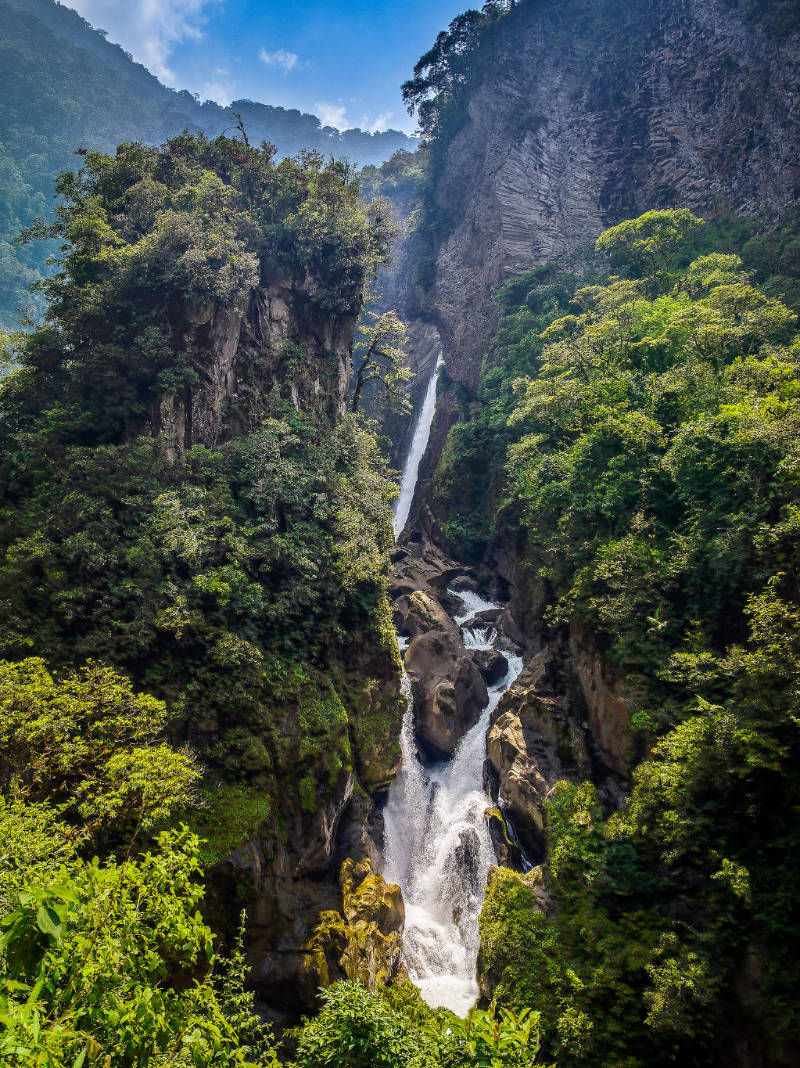
The journey south from Ecuador’s high-altitude capital is defined as much by a dramatic drop in elevation as it is by the physical mileage. Travelers asking how far is banos from quito are often surprised to learn that the relatively modest 190-kilometer distance encompasses a drastic shift in climate and terrain. Quito sits in an Andean basin at approximately 2,850 meters above sea level. By the time the road winds down into the Tungurahua province, the elevation drops to roughly 1,820 meters. This descent marks the boundary where the crisp, thin air of the highlands yields to the dense humidity of the upper Amazon basin. Driving along the Pan-American Highway, the route crosses through a region famously dubbed the Avenue of the Volcanoes. On clear days, the snow-capped peak of Cotopaxi commands the skyline, eventually giving way to the imposing silhouette of the active Tungurahua volcano near your final destination. Because the highway serves as a major commercial artery connecting northern and central Ecuador, the travel time from Quito to Baños fluctuates depending on the volume of freight transport and local agricultural traffic. Towns such as Latacunga and Ambato serve as primary waypoints, breaking up the drive before the final eastward turn toward the cloud forest. Arriving at the gateway to the jungle shifts the focus toward the area's deep gorges and rushing rivers. The distance from the capital effectively separates the bustling urban environment from a landscape shaped by geothermal activity and the carving force of the Pastaza River. Beyond the town center, the Baños–Puyo Road cuts directly through the canyon, offering access to monumental natural features like the Pailón del Diablo waterfall. The transition from a high-altitude metropolis to an environment defined by suspension bridges and cascading water takes merely a morning of driving. Understanding the local geography provides necessary context for any visit. The separation between these two locations dictates packing strategies, as visitors must prepare for both the temperate chill of the departure point and the humid warmth of the arrival zone. Acknowledging exactly how far is banos from quito allows for proper logistical planning, ensuring sufficient daylight remains upon arrival to explore the lower-elevation ecosystems along the Río Verde.
“The 190-kilometer distance encompasses a drastic shift in climate and terrain, bridging the high-altitude capital with the humid Amazon basin.”
Baños de Agua Santa is located approximately 180 kilometers southeast of Quito. The journey typically takes 3 to 4 hours depending on traffic and the mode of transportation chosen.
Terminal Terrestre Quitumbe to Baños Terminal
Pan-American Highway (E35) to E30
Pan-American Highway (E35) to E30
If traveling by bus, verify that your service arrives at the main Baños terminal, which is located within walking distance of the town center.
This full-day itinerary balances the necessary transit from the capital with a complete exploration of the waterfall trails, requiring approximately 10 to 12 hours round-trip.
Begin the journey south toward Baños early to maximize daylight. The drive transitions from high-altitude Andean valleys to the dense cloud forest environment.
Reach the entrance on the Baños–Puyo Road and begin your descent. Walk down the forested path toward the gorge, listening to the rising volume of the water.
Cross the swinging wooden bridge suspended over the lower river. This vantage point provides a wide perspective of the waterfall plunging into the rocky basin.
Ascend the concrete steps carved directly into the cliff face. These platforms position you beside the cascade, resulting in heavy mist and continuous noise.
Crawl through the narrow rock fissure known as the Crack to Heaven. This tight stone passage leads to a final enclosed balcony situated behind the falling water.
Hike back up the steep trail to the upper entrance. Pause for a meal in Río Verde before beginning the return drive to Quito.
Pailón del Diablo maintains a consistent weekly schedule, with extended evening hours on weekends to accommodate visitors.
To experience Pailón del Diablo with the fewest crowds, plan your visit during the recommended arrival window of 08:00–10:00. Arriving early ensures you can navigate the pathways and viewing platforms in morning tranquility before peak visitor numbers arrive.
—
Visiting midweek between 08:00 and 10:00 offers the quietest experience. You will avoid the larger groups that typically arrive later in the day.
Occasional rain with highs near 18°C
This period aligns with shorter rainy spells and manageable crowds. Midweek arrivals during these months remain the most peaceful option.
Drier conditions with highs near 20°C
These months see the highest volume of visitors. Arriving within the 08:00–10:00 window is necessary to bypass peak congestion.
Verdict: For the best experience, plan a Tuesday to Thursday visit arriving at 08:00 during the months of April or October.
Prepare for the varied climates and wet conditions you will encounter between the capital and the waterfall.
Everything you need to know about how far is banos from quito
The driving distance between Quito and Baños is approximately 167 to 180 km, depending on your route. You can reach the city via the Pan-American Highway in about 3 to 3.5 hours by car.
Travel time by bus typically ranges from 3 to 4.5 hours depending on traffic and the operator. Private transfers from Quito to Baños can provide a more direct, door-to-door experience for those on a tighter schedule.
The entrance fee to visit Pailón del Diablo is 5 USD per person. This conservation fee helps maintain the trails and facilities at this popular waterfall landmark.
The site is open Monday through Thursday from 08:00 to 22:00. On Friday, Saturday, and Sunday, it remains open for extended hours from 08:00 to 23:00.
To avoid peak crowds and enjoy the waterfall in morning tranquility, the best arrival window is between 08:00 and 10:00. Visiting during these early hours also offers the best lighting for photography.
Many travelers include Pailón del Diablo as part of a longer itinerary, but it is possible to organize a day tour from Quito to visit the falls and return in the evening. Planning ahead for the 3-hour journey each way ensures you have enough time to explore the trails and viewpoints properly.